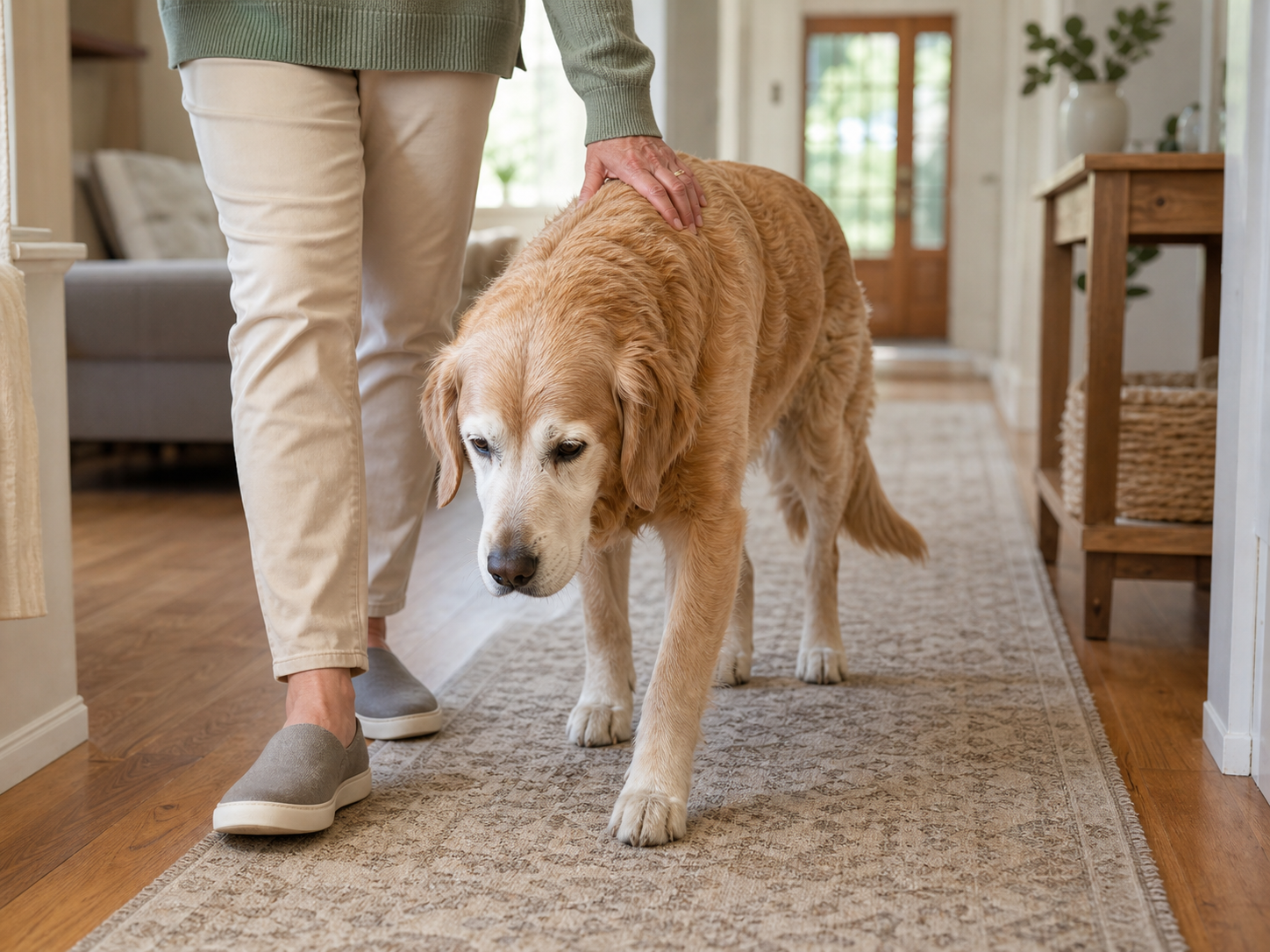
Use categories to make vague change visible
Track disorientation, social interaction, sleep-wake pattern, house-soiling or learned behavior, activity, and anxiety. Examples include getting stuck behind furniture, staring at a wall, greeting family differently, waking and pacing, forgetting the door routine, wandering without purpose, or becoming newly fearful.
Frequency and interference matter
Write how often the behavior happens, how long it lasts, and whether your dog can still complete normal routines. A subtle weekly change and a nightly event that prevents sleep are not the same severity. Short videos can help your veterinarian see posture, awareness, and movement.
Rule-outs are part of good cognitive care
Pain, hearing loss, vision loss, urinary disease, endocrine disease, neurologic disease, medication effects, sleep disruption, and environmental stress can mimic or worsen cognitive signs. A diagnosis should be built from history and clinical evaluation, not age alone.
Home support should reduce confusion
Keep food, water, beds, and doors in stable locations. Use non-slip paths, gentle night lighting, predictable cues, and short daytime enrichment your dog can still succeed at. Avoid rearranging the house or testing your dog until they fail.
Treatment is individualized
Veterinarians may discuss diet, environmental enrichment, pain control, anxiety treatment, medication, and management of other disease. Supplements and products vary in evidence and can interact with medication, so bring every label to the visit.
Create a monitoring baseline
Choose three behaviors that matter in your home, such as settling by midnight, finding the back door, and greeting a family member. Score them weekly using the same wording. Ask the clinic which validated questionnaire it uses and when to recheck.
When to call sooner
- Sudden confusion, circling, head tilt, collapse, seizure, or inability to stand
- A new behavior change appears over hours or days rather than gradually
- Your dog is panicked, unsafe, aggressive, or unable to sleep
- House-soiling or disorientation is paired with thirst, pain, weakness, appetite loss, or medication change
Sources used for this guide
We link to the organization that published each source so you can check the guidance yourself.
This guide is educational and does not replace veterinary examination, diagnosis, treatment, or emergency care. WoafyPet has not labeled this article as veterinarian-reviewed.