Arthritis in Dogs: 7 Gentle Ways to Help
For dogs who still seem happy but rise slowly, avoid stairs, or need shorter walks.
 Join the Care List
Trusted articles, gentle guidance, and real-life prompts to help you give your dog the best days possible.
For dogs who still seem happy but rise slowly, avoid stairs, or need shorter walks.
When meals, treats, water, or weight no longer feel predictable, here is what to track.

For pacing, room changes, wakeups, or nights when your dog cannot seem to settle.
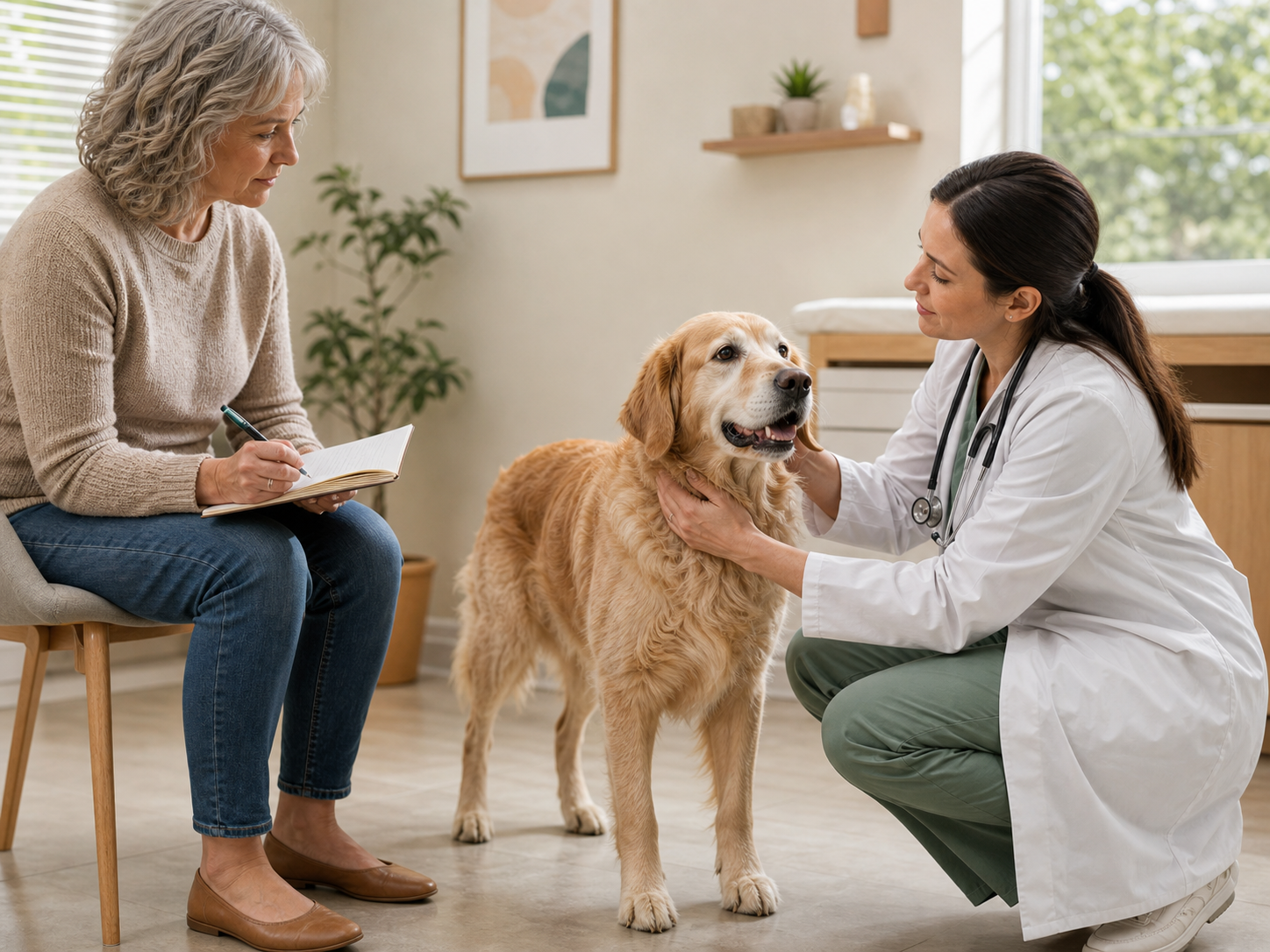
When you are afraid you will forget the details the moment the appointment starts.

For slick floors, couch jumps, stairs, bowls, and paths that suddenly feel harder.

When your dog drinks more, drinks less, or needs water closer than before.

When you bring home an older dog and need to learn their normal before changing everything.
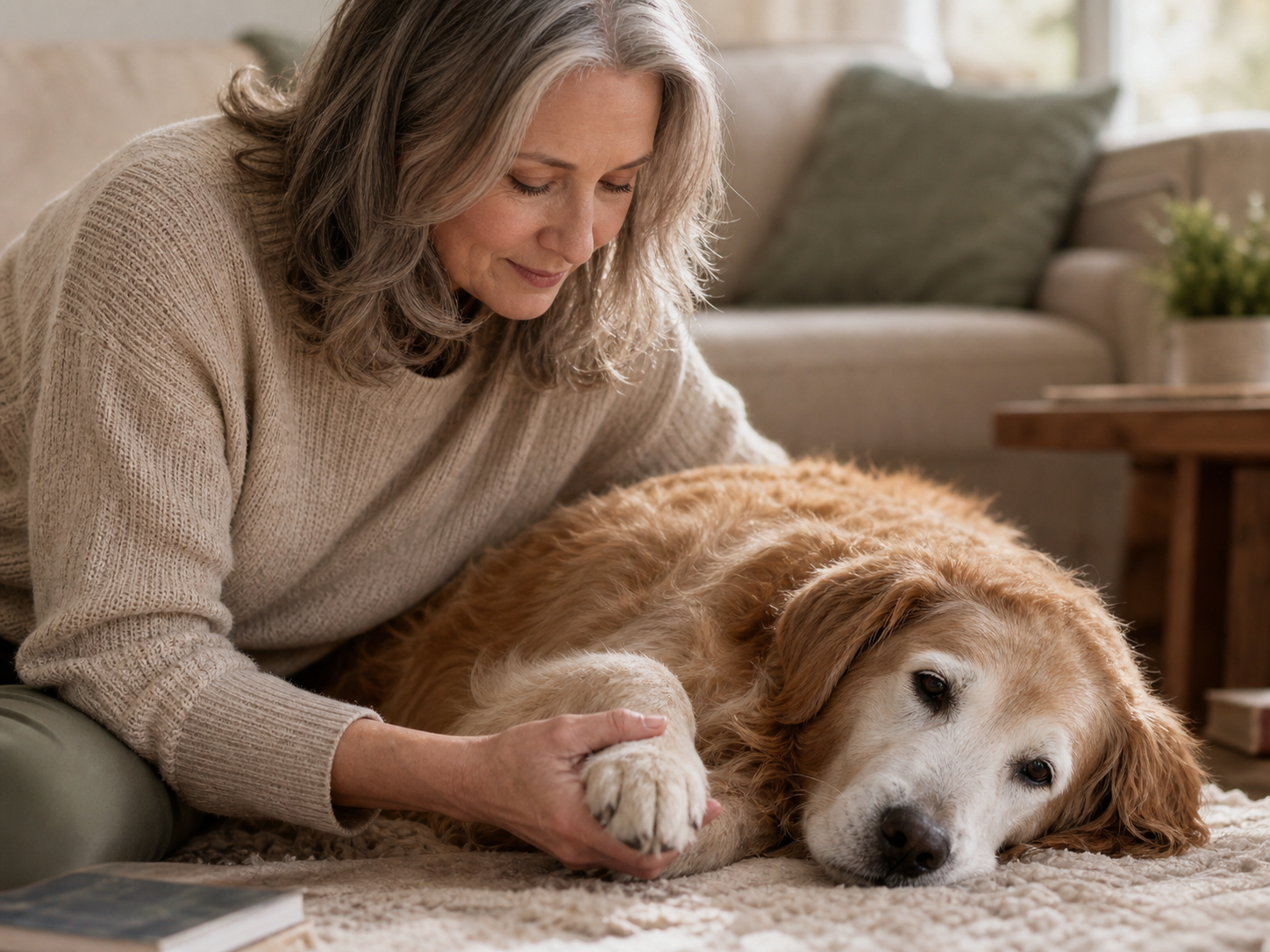
For the days when your dog still has joy, but your heart feels heavy watching changes.
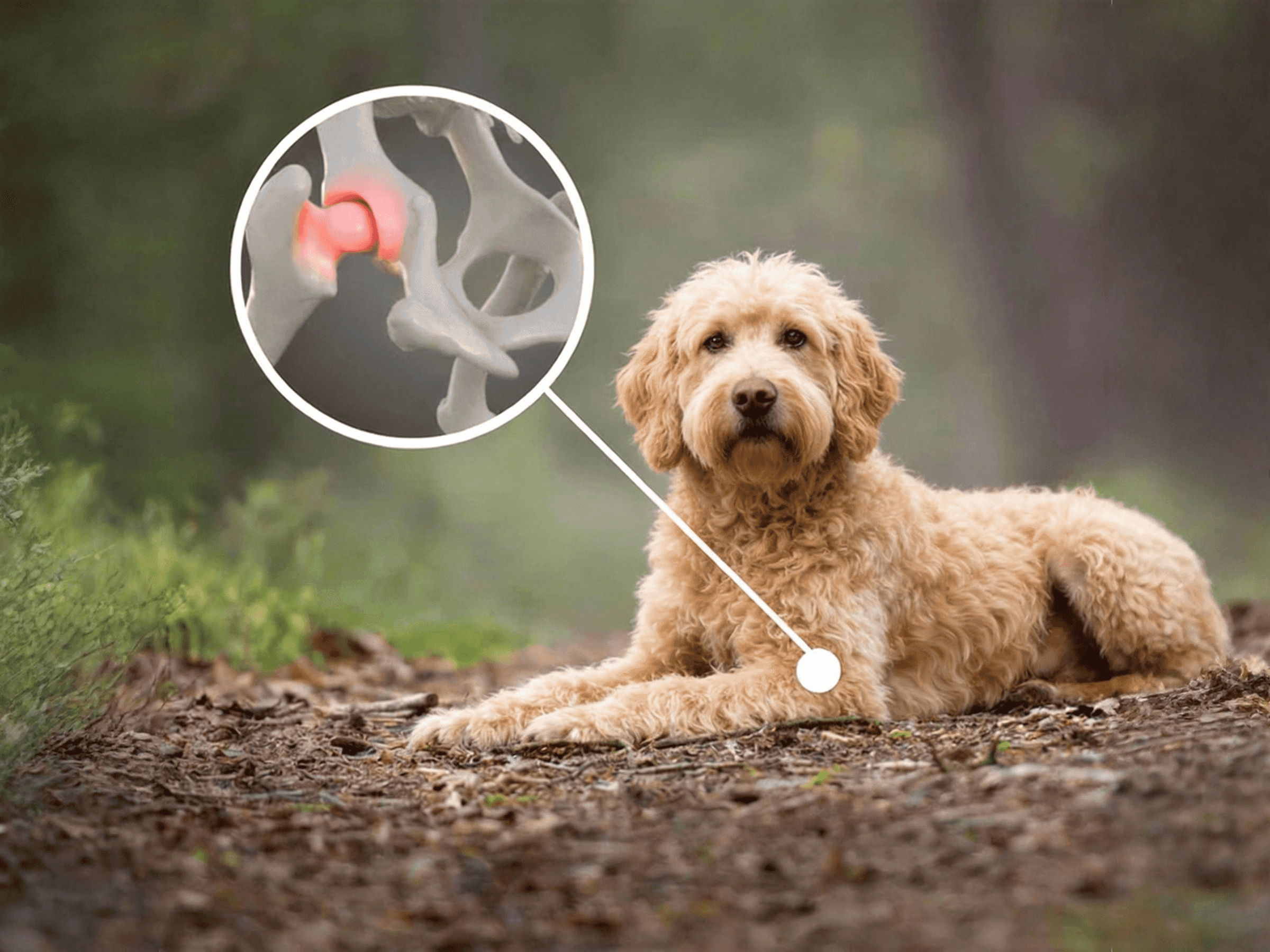
When grief starts before goodbye, or after the house suddenly feels too quiet.
When the family needs calmer words, clearer notes, and less panic around hard choices.

A practical way to separate pain, bathroom urgency, anxiety, medication timing, sensory change, and possible cognitive decline.

How to measure a real change, avoid accidental restriction, and give your veterinarian the details needed to investigate it.

How to notice changes over the spine, hips, thighs, and shoulders, and why the scale alone can miss declining strength.

A specific guide to disorientation, interaction changes, sleep disruption, house-soiling, anxiety, and activity shifts.
What changed chewing, dropped food, face rubbing, new food preferences, and reluctance to be touched can mean for the vet visit.
What to ask before starting, what to watch at home, and why human pain relievers and medication mixing can be dangerous.
How to document urine or stool accidents without punishment and help the vet separate mobility, urgency, pain, cognition, and disease.
A simple body-map method that helps you stop guessing whether a mass changed since last month.
How to record food interest, nausea clues, chewing difficulty, water, medication, and timing without masking a medical problem.
Credentials, evaluation, referral rules, exercise dosing, home plans, and the progress measures that should be clear before treatment begins.
What to do when medication schedules, nighttime waking, lifting, money, guilt, and fear are wearing the family down.
A calm planning guide covering timing, sedation, family, other pets, aftercare, cost, transport, and what happens if the situation changes.
What each option means, what to ask about identity tracking, and which decisions are easier to make before the day of goodbye.
No resource matches that search yet.
Curated guides to help you create a safer, calmer home for an older dog.
Explore Collection